
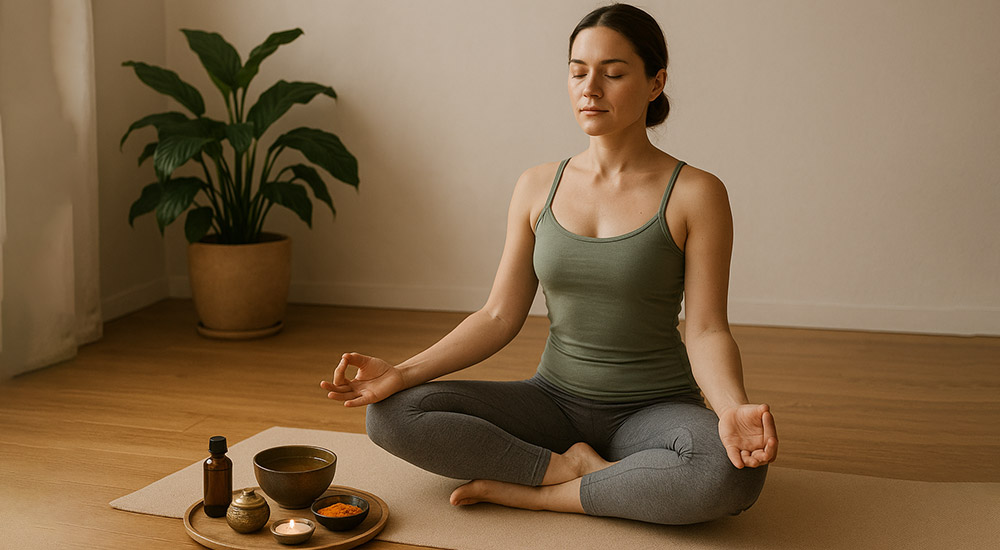
Yoga and Ayurveda share a deep connection, both originating from the ancient wisdom of India and focusing on the holistic well being of the body, mind, and spirit. While yoga helps balance the body and mind through movement, Ayurveda provides a roadmap for nurturing the body’s internal harmony through lifestyle and natural healing practices.
One powerful way to deepen the benefits of your yoga practice is to incorporate Ayurvedic rituals before or after your session. These rituals not only enhance your physical flexibility and mental clarity but also help you connect to your body’s natural rhythms, improve energy flow, and aid in detoxification.
In this article, we explore 5 minute Ayurvedic rituals that you can easily add before or after your yoga practice to enhance overall well being and boost the effectiveness of your session.
1. Abhyanga (Self Massage) to Calm Your Dosha
Best for: Before Yoga, Especially for Vata and Kapha Doshas
Abhyanga, an Ayurvedic self massage using warm herbal oils, is one of the most rejuvenating rituals you can perform. It nourishes the skin, improves circulation, and balances the body’s energy (Doshas). The practice is deeply calming, especially for Vata and Kapha types who tend to feel dry, fatigued, or heavy.
How to Practice:
1. Choose the Right Oil: Select an oil according to your Dosha. For example:
- Vata: Sesame or almond oil (warm to room temperature).
- Pitta: Coconut or sunflower oil (room temperature).
- Kapha: Mustard or safflower oil (slightly warm).
2. Start at Your Head: Begin by massaging your scalp gently with circular motions. Move down your neck, shoulders, and arms, using long strokes toward the heart.
3. Focus on Your Joints: Massage around your elbows, knees, wrists, and ankles. These areas often hold tension and benefit from more attention.
4. Legs and Feet: Massage your legs, starting from the thighs and moving down to your feet. For added benefit, spend extra time massaging your feet, as they are energetically connected to the rest of your body.
5. Leave it On: After the massage, allow the oil to sit for 5–10 minutes before you shower or do your yoga practice. This allows the oil to penetrate deeply into your skin and tissues.
Benefits: Abhyanga helps to calm the nervous system, promote detoxification, and enhance flexibility. Doing it before yoga helps lubricate your joints and prepares the body for movement.
2. Nasya (Nasal Oil Drops) for Mental Clarity
Best for: Before Yoga, Especially for Vata and Pitta Doshas
Nasya is an Ayurvedic practice that involves the application of medicated oil or herbal drops into the nostrils. It is especially effective for those with Vata or Pitta imbalances, who may suffer from mental fog, anxiety, or excess heat. Nasya helps open the sinuses, calm the mind, and promote clarity.
How to Practice:
1. Prepare the Oil: Choose a nasal oil suited for your Dosha:
- Vata: An oil infused with herbs like eucalyptus or lavender.
- Pitta: Cooling oils like sandalwood or rose.
- Kapha: Use oils with invigorating herbs such as eucalyptus or peppermint.
2. Lie Back or Sit Comfortably: Lean back slightly and ensure your head is aligned with your spine.
3. Apply 2-3 Drops: Drop the oil into each nostril, then close your mouth and gently inhale through your nose, allowing the oil to be absorbed into your sinuses.
4. Massage Your Nose: Lightly massage the area around your nostrils and bridge of your nose for a few seconds.
Benefits: Nasya opens up the sinuses, clears blockages, and helps reduce mental fog. It also helps prepare the mind for yoga by inducing a calm and focused state, especially beneficial if you practice early in the morning or need mental clarity.
3. Warm Lemon Water for Detoxification and Hydration
Best for: Before Yoga, for All Doshas
Drinking a glass of warm lemon water first thing in the morning or before yoga can significantly boost your digestive fire (Agni), hydrate your body, and support detoxification. Ayurveda believes that the digestive system is at the core of our health, and warming the stomach with lemon helps stimulate the digestive process, especially important before any physical activity.
How to Practice:
- Squeeze Half a Lemon: Use fresh, organic lemon juice, preferably in a glass of warm (not hot) water.
- Optional Additions: You can also add a pinch of turmeric, ginger, or honey (for Pitta types) to enhance detoxification and digestion.
- Drink Slowly: Sip the water slowly, allowing the digestive juices to start flowing in preparation for your yoga practice.
Benefits: The warm lemon water stimulates the digestive system, balances stomach acidity, and prepares the body for physical exertion. It also helps cleanse the liver and flush out toxins, which can enhance the energy flow during yoga practice.
4. Pranayama (Breathing Exercises) to Calm Your Mind and Prepare Your Body
Best for: Before Yoga, for All Doshas
Pranayama (breathing exercises) is a key element of Ayurvedic yoga and has a profound effect on the nervous system and overall energy balance. Simple pranayama practices before yoga can help calm the mind, enhance focus, and increase energy flow.
How to Practice:
- Sit in a Comfortable Position: Sit cross legged or in a comfortable seated position with your spine erect.
- Deep Breathing: Begin with deep, diaphragmatic breathing, focusing on inhaling through your nose and expanding your abdomen as you breathe in.
- Nadi Shodhana (Alternate Nostril Breathing): This practice is ideal for balancing Vata and calming mental agitation.
- Close your right nostril with your thumb, inhale through the left.
- Close both nostrils, hold for a moment, then exhale through the right nostril.
- Repeat, alternating nostrils, for 5 10 minutes.
Benefits: Pranayama promotes oxygenation of the body, reduces stress, improves lung capacity, and helps increase focus. It also prepares your body and mind for a deeper, more conscious yoga practice.
5. Tongue Scraping for Oral Health and Detoxification
Best for: After Yoga, Especially for All Doshas
Tongue scraping is a simple yet effective Ayurvedic practice that involves using a scraper to remove the layer of toxins (ama) that accumulate on the tongue overnight. It is believed to promote oral hygiene, enhance digestion, and remove excess heat or congestion in the body. Adding this ritual after yoga helps refresh the mouth and aids in detoxification.
How to Practice:
- Choose a Tongue Scraper: Use a stainless steel or copper tongue scraper, which is gentle yet effective in removing the toxins.
- Scrape the Tongue: Stick your tongue out and gently scrape from the back of your tongue to the tip. Do this 4-5 times to remove any buildup.
- Rinse Your Mouth: After scraping, rinse your mouth with warm water or a herbal mouthwash.
Benefits: Tongue scraping removes toxins from the body, improves digestion by stimulating the digestive system, and promotes oral health. It is especially useful after yoga practice when the body is in a detoxifying state and ready to expel toxins.
Conclusion
Incorporating these 5 minute Ayurvedic rituals before or after your yoga practice can enhance the benefits of both practices and help you achieve a deeper level of balance and health. Whether it’s calming your nervous system with Abhyanga, opening your mind with Nasya, or boosting your digestion with warm lemon water, these rituals support your body in holistic ways.
Adding these small but powerful practices to your daily routine will not only improve your physical flexibility but also bring greater mental clarity, emotional balance, and spiritual awareness. Integrating Ayurveda into your yoga practice helps you reconnect with your natural rhythms and live with more vitality in 2025.