In 2026, the global fragrance landscape is witnessing a remarkable evolution. While modern perfumery continues to explore experimental blends and edge cutting molecules, another trend is steadily gaining ground; the resurgence of Ayurvedic perfumes. Rooted in ancient Indian wisdom and natural botanicals, these fragrances are no longer niche curiosities. They are capturing consumer interest worldwide, driven by wellness priorities, sustainability values, and a growing appreciation for authentic heritage. In this article, we explore the real data, cultural influences, and market forces behind this comeback.
The Roots of Ayurvedic Perfumery
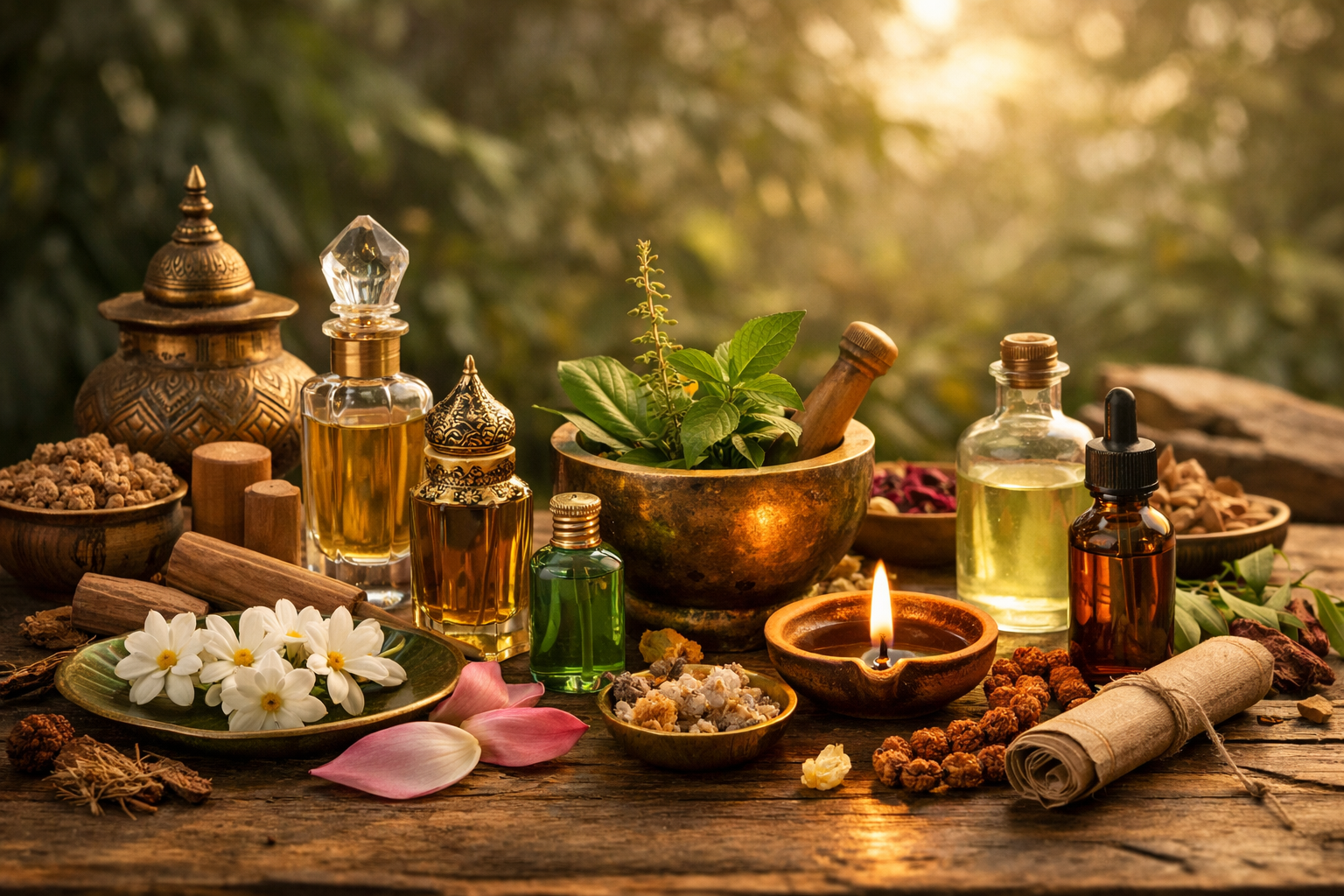
The history of Ayurvedic fragrance is as old as the trade routes that connected South Asia to the wider world. Long before Paris and Grasse became perfume capitals, Indian artisans in regions like Kannauj were distilling attars natural fragrance extracts, from flowers, woods, resins, and herbs. These attars were far more than pleasant scents; they were used in spiritual rituals, therapeutic practices, and holistic grooming traditions. Today’s Ayurvedic perfumes draw on this lineage, emphasizing botanical purity, sensory balance, and harmony with the body’s rhythms.
Market Landscape: Growing Demand for Natural and Wellness-Driven Fragrances
Data shows a clear shift in consumer preferences toward natural, holistic products. The broader Indian flavors and fragrances market which includes perfumes reached an estimated USD 3.08 billion in 2025 and is projected to grow steadily through the next decade. A growing share of this demand comes from consumers who prefer plan -derived, eco-friendly, and “clean” aroma profiles over synthetic chemical heavyweights.
Within this macro trend, Ayurvedic and natural fragrances are gaining traction for several reasons:
- Wellness positioning: Ingredients like sandalwood, tulsi (holy basil), vetiver, and jasmine are valued not just for scent but for emotional and physiological effects. For example, sandalwood is traditionally associated with calming and grounding, while tulsi is linked to stress relief. Modern blends often pair these with lighter notes to create functional fragrances that support wellbeing as well as sensory pleasure.
- Natural ingredients demand: Market analysts report that consumer demand for natural and herbal products, including fragrance ingredients, is a significant growth driver. Aromatic crops and essential oil extraction are expanding in India due to initiatives like the Aroma Mission, boosting supply and quality of botanicals for perfumery.
- Clean and sustainable trends: Ayurvedic perfumes are typically alcohol free, chemical light, and biodegradable, appealing to ecoconscious consumers in Europe, North America, and Asia who are increasingly rejecting synthetic formulations.
Redefining Tradition for a Modern Audience
One of the key reasons Ayurvedic perfumes are experiencing renewed interest in 2026 is because artisans and brands are modernizing these scents without compromising their authenticity. Traditional attars once single note and intense are being reimagined with complexity and wearability in mind.
High quality jasmine, sourced from regions like Madurai and Southern India, now often appears in blends that incorporate both indigenous and globally popular accords, striking a balance between classic olfactory character and contemporary sophistication.
This blending of old and new is crucial. Younger consumers want storytelling in their products fragrances that reflect culture, identity, and personal values, not just a transient trend. Today’s Ayurvedic perfumes often come with narratives about sourcing, regional heritage, and artisanal craftsmanship, which is exactly the kind of emotional engagement that modern buyers seek.
Why 2026 — Why Now?
While interest in Ayurveda has been rising for years, several factors have converged that make 2026 a pivotal moment for Ayurvedic perfumery:
1. Global Wellness Movement
The global wellness industry is now worth trillions of dollars, with consumers increasingly investing in products that promise physical, emotional, and mental wellbeing. Fragrances are no exception today they are seen as functional tools that influence mood, reduce stress, and enhance personal aura. Ayurvedic perfumes, with their botanical complexity and holistic positioning, are uniquely aligned with this trend.
2. Sustainability and Clean Beauty
In an era where environmental concerns shape purchasing decisions, natural formulations are winning. Compared to synthetic popular perfumes, Ayurvedic fragrances often have a smaller ecological footprint thanks to biodegradable ingredients and traditional distillation methods. This resonates with Gen Z and Millennial buyers who prioritize sustainability.
3. Cultural Heritage and Pride
Consumers in India and the diaspora are actively rediscovering their cultural heritage, and Ayurveda as a deeply Indian practice; fits this renaissance perfectly. Many brands now use heritage stories, ethical sourcing, and region-specific ingredients to create perfumes that feel meaningful and rooted in identity.
Brands and Innovations Leading the Way
A number of small and medium niche brands are at the forefront of this comeback, taking traditional Ayurvedic principles and translating them into premium, globally appealing products:
- Soma Ayurvedic — Known for its Mysur Sandalwood perfume oil, this brand has garnered international acclaim and even industry awards, demonstrating how traditional Indian materials can rival global luxury standards.
- Local perfumers across Kannauj and beyond — These artisans are blending traditional attar techniques with contemporary sensibilities, creating gender neutral, long lasting, and skin friendly formulations that appeal to both domestic and international consumers
This movement is not limited to India. Ayurvedic and herb inspired fragrances are also appearing in international niche collections, where consumers seek authentic sensory experiences rather than mass market recognizability.
Challenges and the Road Ahead
Despite the buzz, Ayurvedic perfumes face challenges. Traditional perceptions that Ayurvedic products are old-fashioned still linger among some consumers, especially outside niche markets. Mintel research suggests that a significant portion of Indian beauty buyers still see Ayurvedic beauty products as outdated, highlighting a need for modern branding and scientific validation.
Moreover, widespread industry standards and certifications for Ayurvedic fragrance efficacy are still in development, which can limit mainstream adoption.
However, the broader market data paints a positive picture: as natural and wellness-oriented products continue to grow, Ayurvedic fragrances have a real opportunity to establish themselves as mainstream luxury staples by the end of the decade.
Conclusion
The revival of Ayurvedic perfumes in 2026 is not a fleeting fad; it’s a structural trend supported by shifts in consumer values, sustainability priorities, and a desire for authentic sensory experiences. By combining ancient wisdom with modern formulation, storytelling, and global market appeal, Ayurvedic fragrances are carving out a significant niche in the global perfume industry.
Whether you’re a conscious consumer, a fragrance enthusiast, or an industry observer, the resurgence of Ayurvedic perfumery is a powerful example of how tradition and innovation can come together to create truly timeless luxury. And this story is only just beginning.